
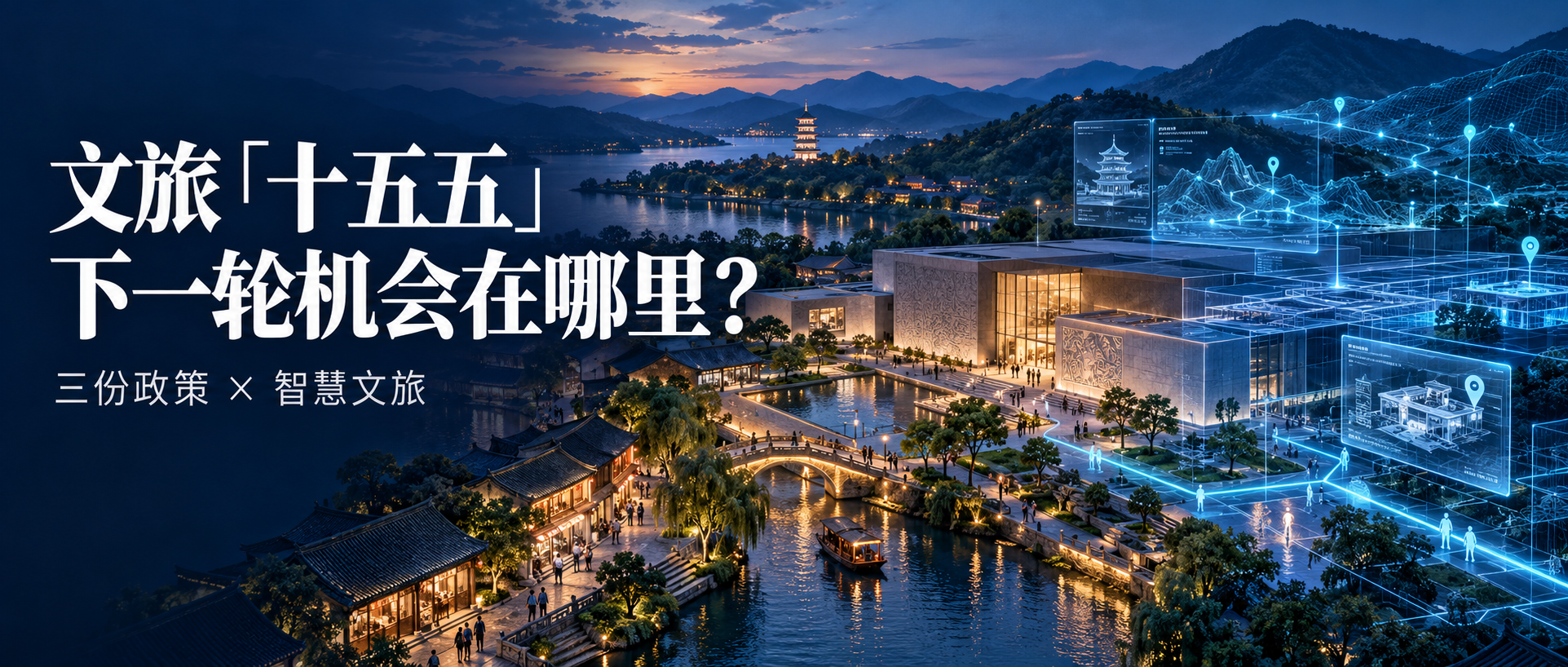
From building China into a tourism powerhouse, to integrating culture and tourism, to allocating natural resources, three policy documents together outline a development path for the next five years. For smart culture and tourism, the next opportunities will arise in specific settings: making industry data usable, putting AI services into practice, and improving visitor experience, operational efficiency and governance together.
A family weekend trip often begins with small questions: Can the older family members manage the walking? What can the children experience? How long will the queue be at the attraction? Can the itinerary be adjusted when it rains?
Behind these questions lie cultural content, transport connections, ticket reservations, attraction operations and public services. The quality of a destination experience often depends on how smoothly these elements work together.
As the 15th Five-Year Plan period begins, national policy is giving this coordination a clearer direction. The 15th Five-Year Plan for Building China into a Tourism Powerhouse, the 15th Five-Year Plan for Cultural and Tourism Development, and the Guiding Opinions on Optimizing Natural Resource Allocation to Promote the Standardized and Orderly Development of Tourism address key questions of high-quality development through goals, industry tasks and resource conditions respectively.
The policies suggest that the value of smart culture and tourism will increasingly be seen in concrete outcomes: convenient services, accessible cultural experiences, effective operations and timely governance. Bringing AI into these real operations is a starting point for understanding this round of industry opportunities.
01 How Three Documents Together Address Better Cultural and Tourism Development
The first plan sets goals for building China into a tourism powerhouse. On June 29, 2026, the State Council approved the 15th Five-Year Plan for Building China into a Tourism Powerhouse in principle; the approval was made public on July 7. The plan sets targets for 2030 of 8.3 billion domestic resident trips and RMB 7.7 trillion in total domestic travel spending. These are plan targets, pointing to growth in scale as well as greater visitor satisfaction, a stronger sense of benefit and better service quality. [1][2]
The second plan considers culture and tourism together. Issued by the Ministry of Culture and Tourism on September 11, the 15th Five-Year Plan for Cultural and Tourism Development places cultural heritage protection, public services, industrial development, market governance and technology applications in one framework. It sets out more specific tasks for bringing cultural content into tourism experiences and using technology to meet industry needs. [3]
The third document addresses the resource conditions for projects. The three-department guiding opinions, dated July 23 and published September 15, address spatial coordination, land-use controls, resource supply, use of existing assets, and services and supervision. They support qualifying projects while requiring planning, protection, safety and investment returns to be considered during early assessment. [4]
Taken together, the documents suggest a connected path: development goals guide industry tasks, industry tasks connect to specific scenarios, and resource policies define the conditions for implementation. For cultural and tourism technology companies, opportunities come from understanding this path and turning it into useful products and ongoing services.
02 Culture and Tourism AI Must Bring Industry Knowledge into Real Operations
Part VII of the 15th Five-Year Plan for Cultural and Tourism Development sets out tasks directly related to AI in the sector: supporting intelligent applications that combine general and specialist capabilities, building high-quality industry datasets, deploying application pilots and developing system solutions for high-value scenarios. The tourism powerhouse plan also calls for stronger foundation-model services and technology applications throughout the chain, from itinerary planning and guiding to visitor-flow alerts and safety supervision. [5][2]
This means that culture and tourism AI must answer two questions at once: does it understand the place, and can it get the task done?
Understanding a place requires verifiable cultural knowledge, as well as up-to-date opening hours, ticket rules, transport information and accessibility information. An assistant that speaks fluently but does not know a venue has temporarily closed is unlikely to earn a visitor’s trust. High-quality datasets should be designed together with content review, information updates and clear responsibilities.
Getting a task done requires AI to work with existing business systems. For a trip with older family members and children, a service can identify needs and recommend a route based on walking intensity, opening hours and reservation availability. Orders, cancellations and changes should be confirmed by the visitor and executed by authorized business systems. When plans change, the service should offer verifiable alternatives and retain access to human assistance.
For the industry, the combination of domain foundation models, scenario-specific agents and destination service platforms must be developed around these concrete tasks. Whether a service can be completed, information is accurate and exceptions are handled should be important measures of product quality.
03 Renewing Existing Spaces Needs Cultural Content and Operational Capability
All three documents provide a window into effective use of existing resources. The cultural and tourism development plan calls for revitalizing existing facilities and underused projects; the natural resources guiding opinions address the use of existing properties, industrial land and old factories.
For example, when existing industrial land and old factory spaces are used for cultural and tourism activities, a five-year transition policy may support use under the original purpose and rights, provided the land-use entity and planning conditions remain unchanged, except for land-use designation. Managing small, scattered tourism support facilities according to the original land category also has specific conditions; projects involving forest or grassland must still comply with relevant standards and procedures. These conditions should be checked early in project planning. [4]
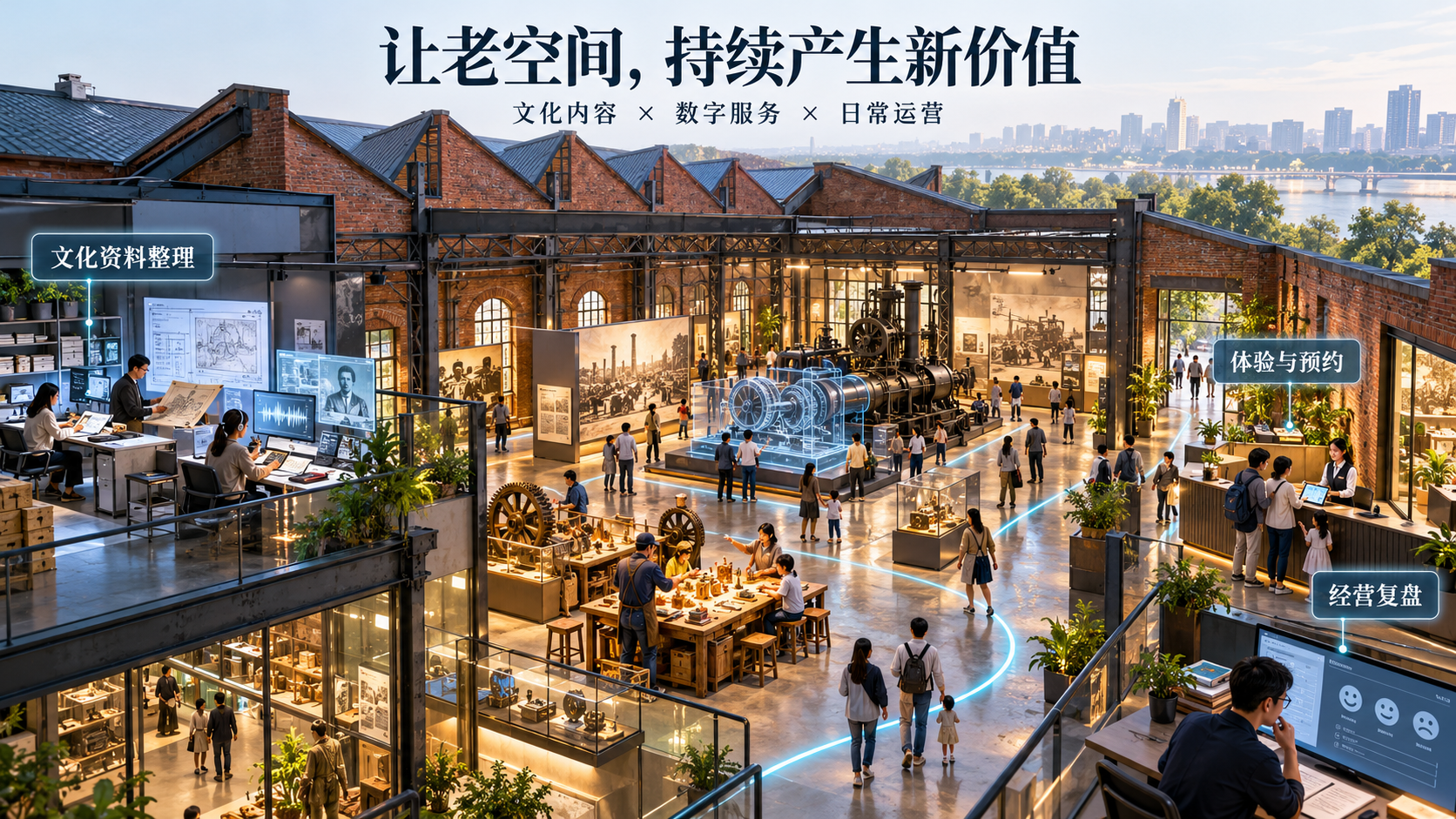
Against this backdrop, renewing an old factory, historic street or rural destination requires an answer to how the space can be used sustainably. Can industrial memories become interpretation and educational activities? Can intangible cultural heritage experiences support reservations, reception and return visits? Can an evening performance coordinate with nearby dining, transport and accommodation?
Digital technology can help organize cultural materials, produce content, provide multilingual interpretation, manage reservations and analyze operations. Cultural content needs professional review, commercial arrangements must suit the site’s capacity, and digital services must be integrated into daily operations. Together, these can help new settings offer attractive experiences over time.
On this basis, renewal of existing assets is likely to create more demand for ongoing operations and service improvement. Projects can include length of stay, nearby spending and visitor reviews in operational evaluation, continually testing the actual effects of cultural content and digital services.
04 A Single Experience Depends on Destination-Wide Coordination
Visitors see an itinerary; a destination must coordinate multiple operators and public authorities. Attractions, venues, travel agencies and merchants each have their own systems, while data updates, business rules and response responsibilities differ. Better service often begins at these points of connection.
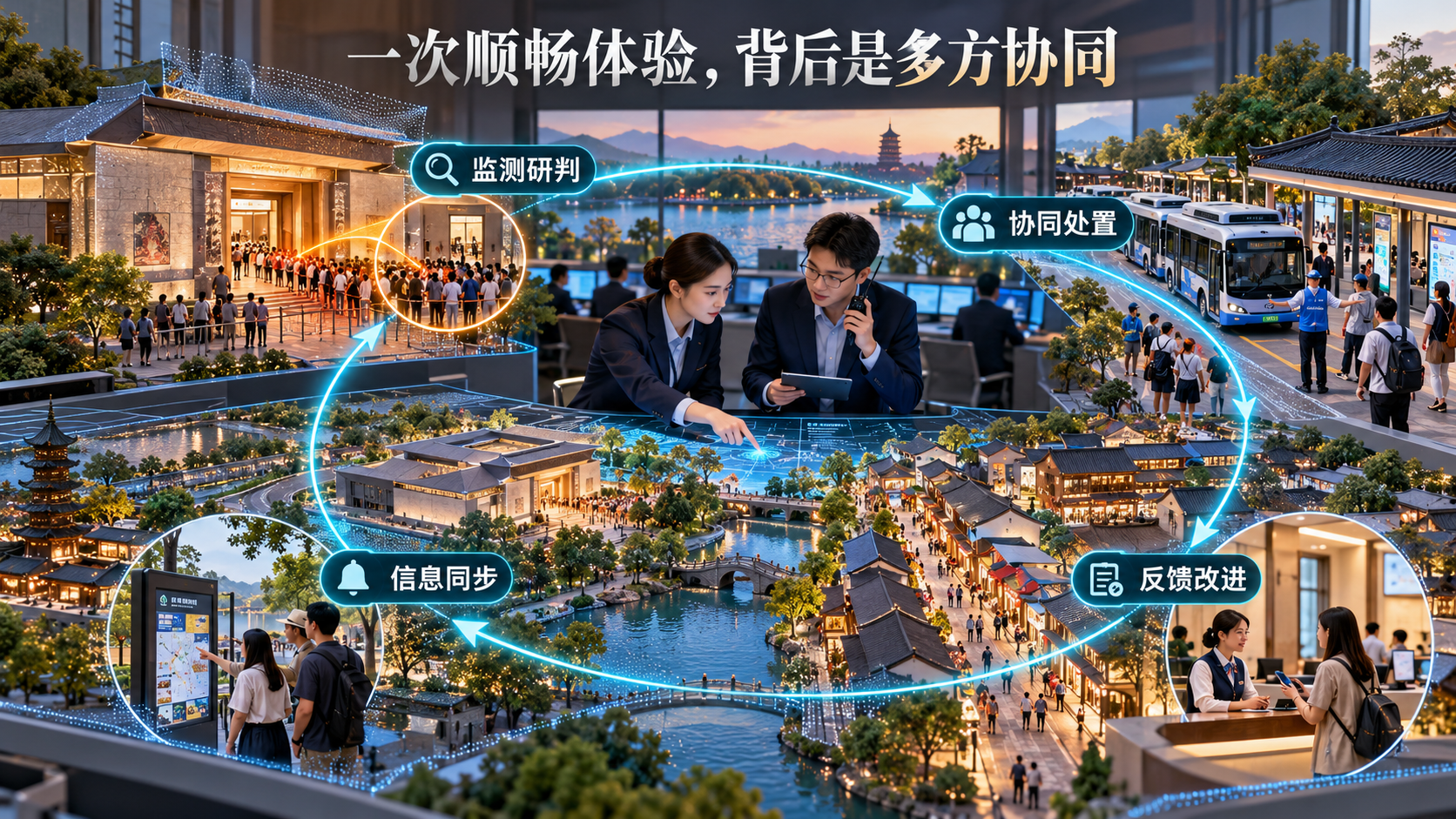
The plan sets out relevant measures: build tourism information services and emergency command systems, integrate forecasting, monitoring, early warning and response, strengthen cross-department coordination, and improve complaint classification and handling standards. This calls for technology to support executable, traceable business processes. [5]
For example, when visitor numbers approach capacity, can a system provide timely evidence to help staff initiate diversions and communicate changes to visitors? Once a complaint enters the platform, can it identify the responsible party, track handling and feed recurring issues back into service improvements? The continuity of these steps directly affects governance effectiveness.
Industry practice is already exploring such coordination. For example, Global DigiTech Innovation Co., Ltd.’s integrated “Cloud-Intelligence-Chain” full-scenario AI+SaaS solution was listed as an excellent solution in the governance category of the 2024 National Smart Tourism Solutions list. This is one example for understanding scenario development and coordinated governance. [6]
In this direction, the capabilities of smart culture and tourism providers need to translate into clear data permissions, reliable system integration, traceable handling records and ongoing operation and maintenance. Convenient visitor services require stable coordination among the parties involved.
05 Start with a High-Value Scenario and Build Repeatable Services
For attractions, destination operators and technology providers, the policy opportunities can be translated into three connected priorities.
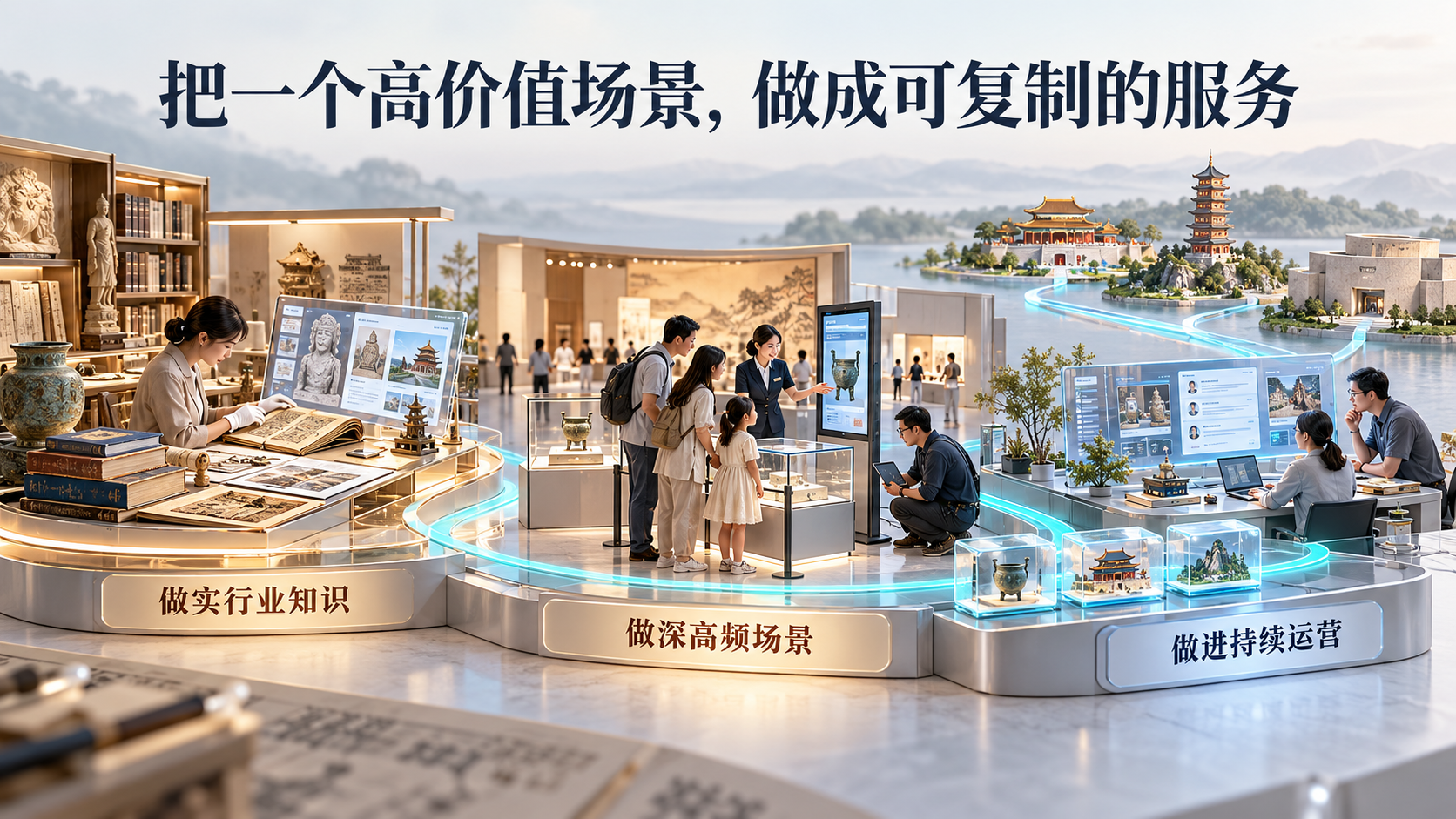
First, establish a solid foundation of industry knowledge. Organize authoritative sources and operational data for interpretation, questions and answers, reservations and alerts, and define sources, authorization, update cycles and review responsibilities. Data must support specific services to provide an effective foundation for industry models.
Next, deepen high-frequency scenarios. Start with needs such as visitor inquiries, multilingual guiding, attraction customer service or complaint coordination. Pilot scenarios with clear business ownership, suitable data and measurable outcomes. Use information accuracy, task completion, human takeover and user feedback to evaluate results before expanding.
Finally, incorporate ongoing operations. After launch, knowledge must be maintained, rules updated, exceptions reviewed and processes improved. Project plans should consider both construction and operation, set out the responsibilities of technology, content and frontline staff, and then identify service modules suitable for replication.
The policy combination for culture and tourism in the 15th Five-Year Plan period sends a clear signal: cultural value, visitor experience, operational efficiency and public governance must support one another within a destination.
The next opportunities for smart culture and tourism lie in these connections: helping vertical AI understand industry operations, bringing industry data into service processes, and testing technology through real use and long-term operation. The development goals in policy must ultimately be felt through trips that are more convenient, culturally meaningful and reassuring.
References
[1] State Council. Approval of the 15th Five-Year Plan for Building China into a Tourism Powerhouse. 2026-06-29. https://www.gov.cn/zhengce/zhengceku/202607/content_7074517.htm
[2] State Council. 15th Five-Year Plan for Building China into a Tourism Powerhouse. https://www.gov.cn/zhengce/zhengceku/202607/P020260708429503283452.pdf
[3] Ministry of Culture and Tourism. Notice on Issuing the 15th Five-Year Plan for Cultural and Tourism Development. 2026-09-11. https://www.gov.cn/zhengce/zhengceku/202609/content_7081315.htm
[4] Ministry of Natural Resources, Ministry of Culture and Tourism, National Forestry and Grassland Administration. Guiding Opinions on Optimizing Natural Resource Allocation to Promote the Standardized and Orderly Development of Tourism. 2026-07-23. https://www.forestry.gov.cn/lyj/1/lczc/20260915/688613.html
[5] Ministry of Culture and Tourism. 15th Five-Year Plan for Cultural and Tourism Development. https://zwgk.mct.gov.cn/zfxxgkml/ghjh/202609/P020261006458771650339.pdf
[6] Ministry of Culture and Tourism. 2024 National Smart Tourism Solutions List. https://zwgk.mct.gov.cn/zfxxgkml/zykf/202501/P020250123546197978741.pdf