

On November 19, President Xi Jinping chaired the 33rd APEC Economic Leaders' Meeting in Shenzhen and delivered an important address. He noted that technological and industrial innovation is flourishing and stressed that building an Asia-Pacific community requires a commitment to innovation.
Turning technological innovation into a driver of industrial development requires finding practical applications. In culture and tourism, this might mean an itinerary better suited to visitors' needs, smoother reception at a scenic area, or a more timely coordinated response to changing weather and peak visitor flows. From understanding needs to delivering services, artificial intelligence is opening new possibilities for smart culture and tourism.
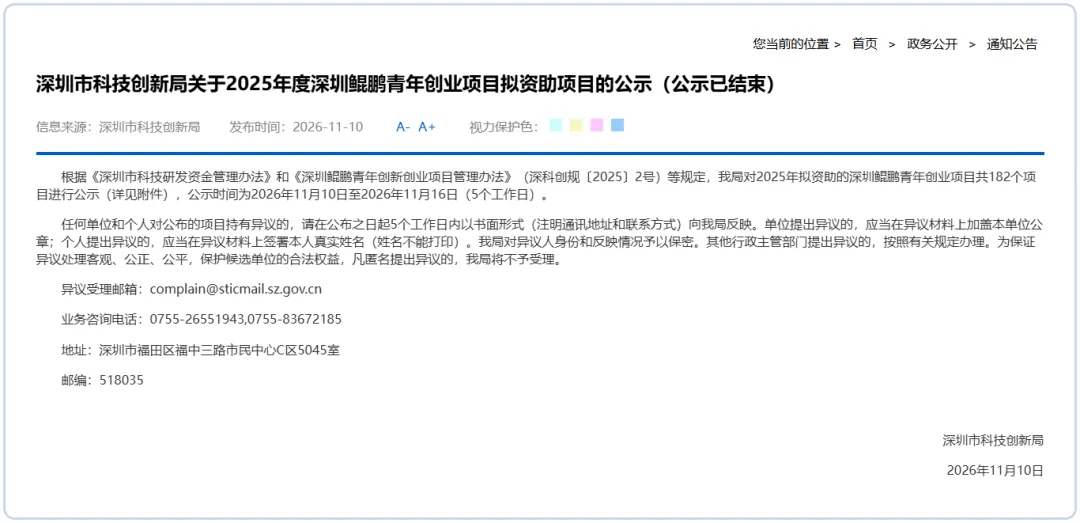
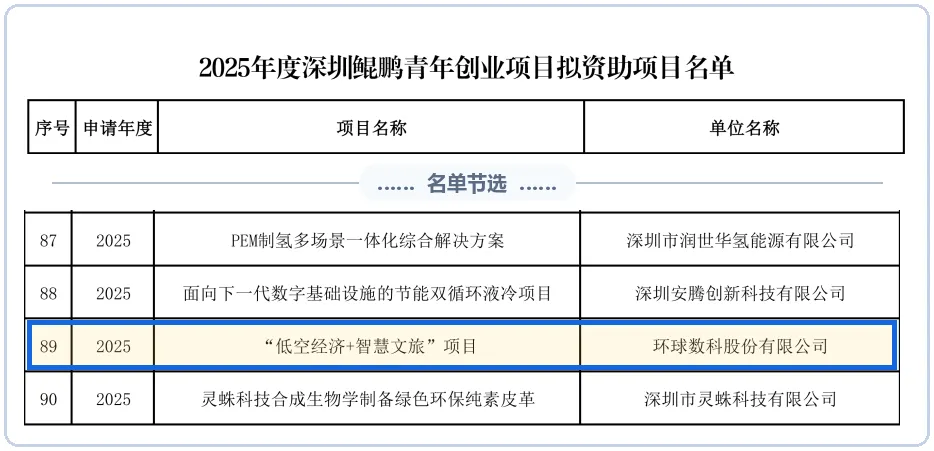
Focusing on these real-world scenarios, Global DigiTech continues to explore the integrated application of domain-specific large models, industry ontologies and scenario-specific agents. The Science and Technology Innovation Bureau of Shenzhen Municipality recently released the 2025 list of Shenzhen Kunpeng Youth Entrepreneurship Projects. Global DigiTech Innovation Co., Ltd.'s “Low-Altitude Economy + Smart Culture and Tourism” project was selected, providing new momentum for the company's cultural tourism scenario innovation and deeper application of AI.
Connecting Services
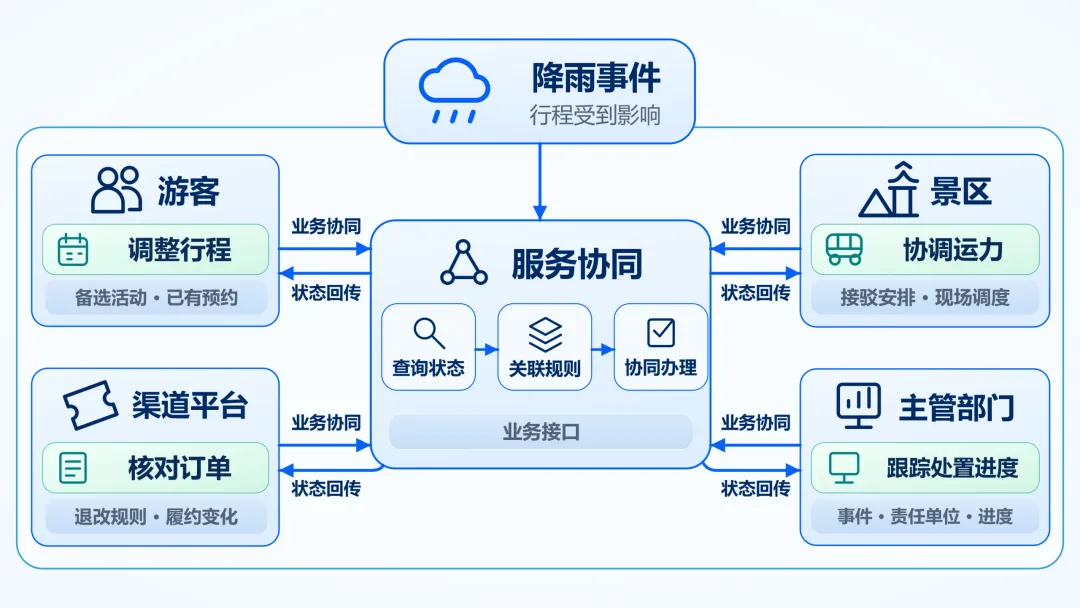
Buying tickets, booking rooms and checking travel guides can now mostly be done online. But rain or a facility closure can disrupt an entire trip: visitors must find new routes, scenic areas must adjust shuttles and on-site arrangements, and sales channels must check orders and change or refund rules. The information is in the systems, yet people still have to make repeated inquiries, telephone calls and individual arrangements.
One change often affects multiple parties. Visitors want to know whether they can continue their trip, scenic areas whether resources can be reassigned in time, and sales channels whether orders can be fulfilled. Authorities need to track incidents, responsible parties and progress in handling them.
These are the cross-system service coordination problems that cultural tourism AI needs to address. It must understand needs, check real-time status, follow business rules and connect different systems to complete tasks. A dialogue window that only answers questions cannot handle all this work by itself.
How Three Technologies Share the Work
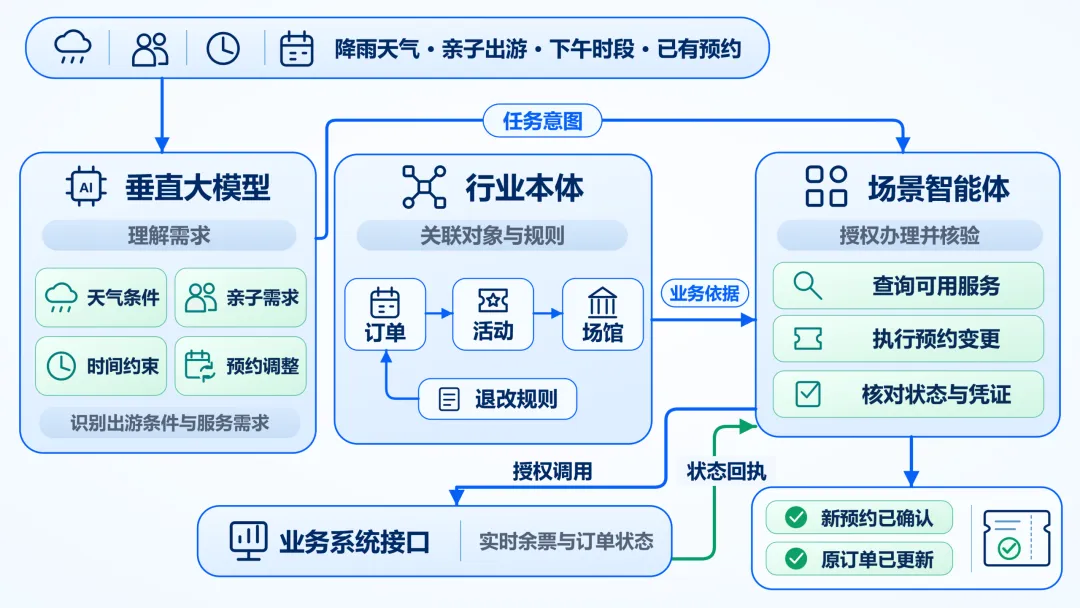
Suppose a visitor asks, “It's raining and I have a child with me. Where can we go this afternoon? What happens to our existing reservation?” A complete service must understand the request, determine the relevant business rules and carry out the necessary steps.
A domain-specific large model understands the request. It recognizes conditions such as travelling with a child, rain and limited time, and understands that the visitor wants an alternative activity and may need to deal with an existing reservation. Industry corpora and task examples can adapt the model; knowledge such as interpretation materials and service guidelines can be retrieved as needed through retrieval-augmented generation (RAG), giving answers a concrete basis.
An industry ontology connects the business context. Like a business map that AI can read, it defines attractions, activities, orders and visitors as business objects and describes their relationships and applicable rules. For example, it identifies which activity an order relates to, where the activity takes place and what conditions apply to changes or refunds. Current ticket availability and order status must be queried from business systems through interfaces.
A scenario-specific agent executes the task. Combining the model's understanding with the business context supplied by the ontology, it organizes inquiry and processing steps and calls ticketing, shuttle, work-order or notification interfaces. For changes or refunds, it first obtains the necessary confirmation, then submits the request and checks the status and documentation.
The service is truly complete only when the new reservation is created, the original order is correctly updated and the visitor receives valid documentation.
Making AI Execution Reliable
The division of technical responsibilities addresses how a task is performed; reliability determines whether the service can be trusted. A model can make suggestions, but authorization checks, amount calculations and transaction submissions should still be completed by the relevant business systems according to their rules.
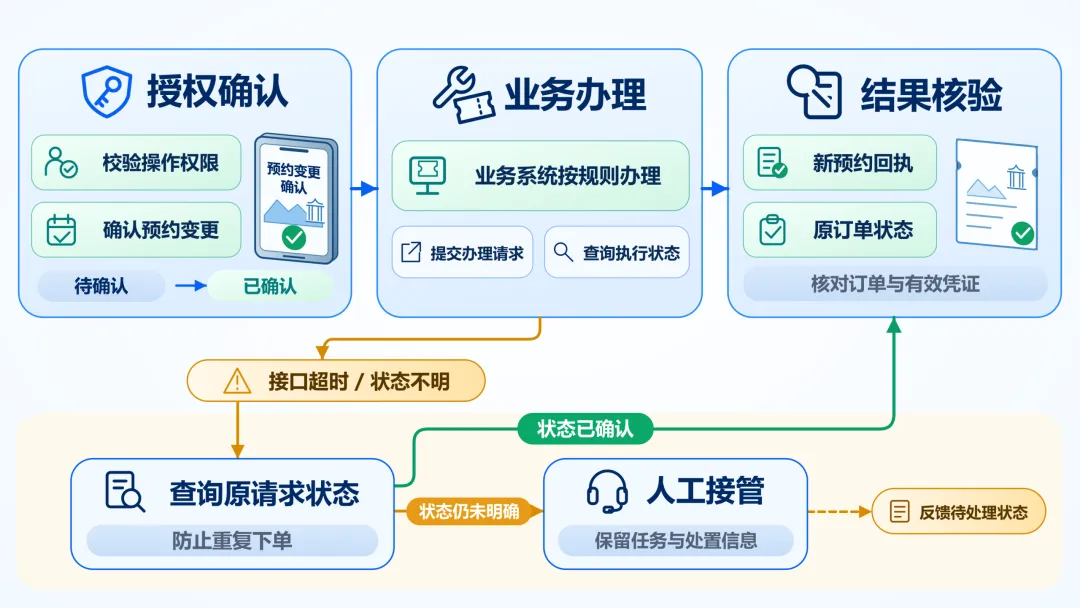
First, it must be clear who is authorized to do what. Checking venue information and changing an order require different permissions. When charges or itineraries are affected, the proposed action should be explained to the visitor and the necessary confirmation obtained. An agent may access only the data and approved tools needed for its task; unauthorized requests should be stopped or handed over to a person.
Second, uncertainty during execution must be managed. If a rebooking interface times out, the system should not assume failure and place a duplicate order. It should check the status of the original request before deciding whether to retry. Completed actions should not be repeated; cases that remain uncertain should be handed over to a person, with the information needed to continue preserved.
Finally, results must be verifiable. The system should record requests, authorizations, interface calls, execution status and receipts, and accurately inform visitors whether an action succeeded, failed or remains pending. A message saying “arranged for you” cannot replace a real order and valid confirmation.
Evaluating cultural tourism AI therefore requires more than checking whether answers are fluent. It also requires measuring task success, human takeover rates, exception recovery time and visitor feedback. Incorporating these indicators into daily operations makes it possible to continually identify problems and improve service.
Global DigiTech's Practice
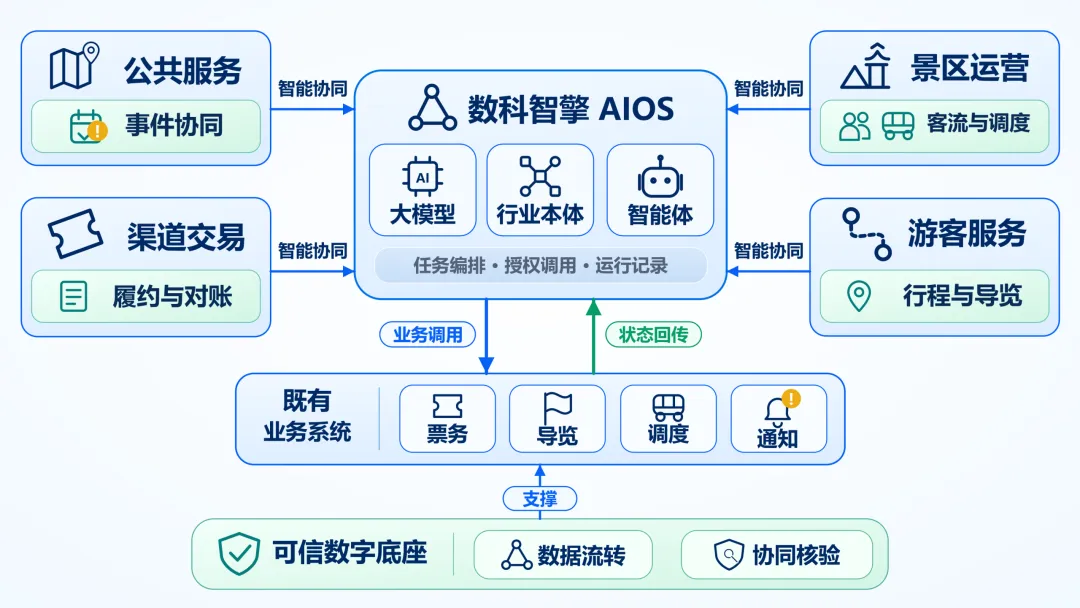
Adding intelligent coordination to existing platforms is the direction of Global DigiTech's cultural tourism AI upgrade. The company connects AI to specific business processes across public cultural tourism services, scenic-area operations, channel transactions and visitor services, gradually expanding its applications.
Shuke Zhiqing AIOS organizes models, knowledge, tools and tasks, connects industry ontologies with scenario-specific agents, and handles task orchestration, authorized calls and operational records. A trusted digital foundation supports data flows and coordinated verification. Existing ticketing, guidance and dispatch systems continue to process business operations, with intelligent coordination built on these capabilities.
For example, during holiday congestion at an entrance, AI can relate reservation volumes, on-site visitor flows, area capacity and emergency plans to help assess the affected area. Once scenic-area staff confirm diversion and transport-capacity adjustments, dispatch, announcements and visitor notifications can be coordinated. Sales channels receive updated fulfillment information, while managers continue to track on-site feedback.
The company's all-scenario smart scenic-area solution has been selected as a Shenzhen AI industry application demonstration benchmark project. In 2026, together with the College of Computer Science and Software Engineering at Shenzhen University, the company was approved for a key science and technology innovation R&D project of the Ministry of Culture and Tourism, advancing multimodal content generation, air-ground coordination and immersive interaction for low-altitude sightseeing in scenic areas. These efforts provide a foundation for continued exploration of AI in more complex cultural tourism operations.
Looking Ahead
From itinerary changes to visitor-flow management, the value of cultural tourism AI must ultimately be judged by real results. As industry knowledge accumulates and business interfaces are connected, services scattered across systems can become better coordinated, reducing visitors' waiting times and repetitive coordination for frontline staff.
The logo for the 2026 APEC China year uses interwoven wings to form a soaring peng, expressing a vision of moving forward and developing together. For technology companies rooted in Shenzhen, pursuing innovation means turning technological exploration into tangible service improvements, one at a time.
Taking this selection as a new starting point, Global DigiTech will continue to upgrade its cultural tourism platforms with AI, turning technical experience from mature scenarios into reusable capabilities for more scenic areas and cultural tourism enterprises.
Company Profile
Founded in Shenzhen in October 2001, Global DigiTech Innovation Co., Ltd. has grown over more than two decades into a national high-tech enterprise, a key software enterprise encouraged by the state and a national intellectual property advantage enterprise, grounded in digital technology and committed to empowering a better life through innovation. As an industry leader, the company was named in the third batch of national-level key specialized and innovative “Little Giant” enterprises, recognized as a Guangdong manufacturing single champion in 2025, and accredited in the same year as both a Shenzhen Enterprise Technology Center and a Guangdong Engineering Technology Research Center.


Editor: Strategic Development Center
Reviewer: Wang Dan