
Abstract: The Ministry of Industry and Information Technology proposed to accelerate the introduction of the "artificial intelligence + software" action plan, and software development, product services and industrial formats have entered a stage of simultaneous reconstruction. In the short term, AI will not make software disappear, but will push software from functional tools to industrial intelligence systems that can understand business, execute processes, and verify results. Global DigiTech Innovation Co., Ltd. has been included in the list of key software companies encouraged by the state for the second time, which is an important footnote in the transformation of this industry.
On July 20, the State Council Information Office held a press conference on the development of industry and information technology in the first half of 2026. The Ministry of Industry and Information Technology has clearly stated that it will accelerate the introduction of the "artificial intelligence + software" action plan, promote the intelligent transformation of software development, intelligent upgrade of software products and services, and cultivate new forms of intelligent software.
These three directions run through the production end, product end and business end of software. AI is no longer just a new feature in software, but has begun to change how software is developed, how it enters business, and how it continues to create value.
Policy setting tone: Software is the core carrier of AI implementation
The model can be understood and generated, and the software is responsible for bringing this ability into the production environment: connecting data, calling tools, controlling permissions, executing processes, recording processes, and running in conjunction with the organization's original business systems. The more AI penetrates into thousands of industries, the more it becomes inseparable from a stable, trustworthy, and sustainably evolving software system.
What is being changed is not the software industry itself, but the traditional model that relies on repetitive coding, homogeneous delivery, and one-off projects. Requirement understanding, architecture design, data governance, system integration and continuous operation are becoming the new focus of software value.
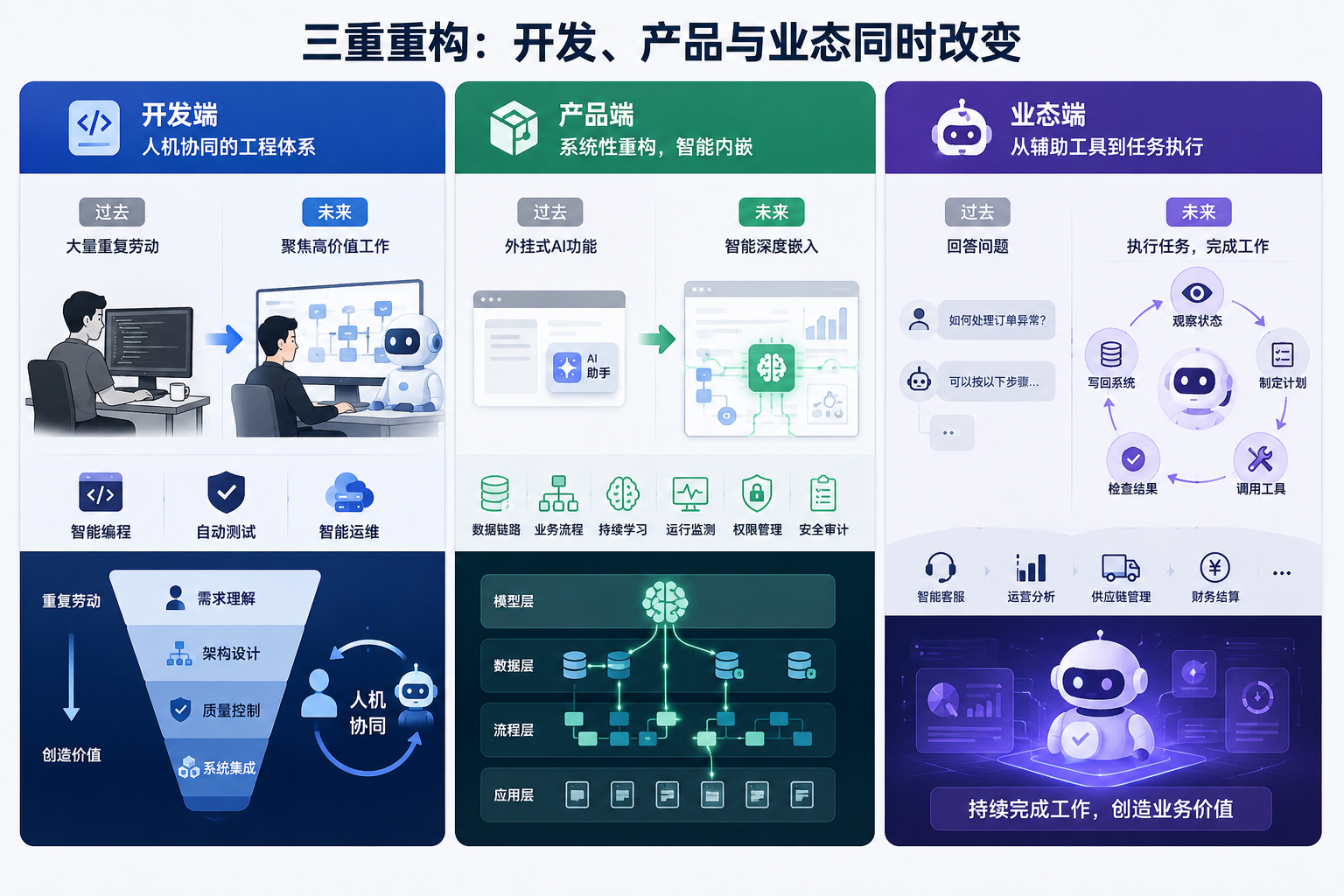
Triple reconstruction: development, products and business formats change at the same time
Development side: Intelligent programming, automatic testing and intelligent operation and maintenance are reducing repetitive labor, but the importance of demand understanding, architecture design, quality control and complex system integration has increased. Future software development will be more like a human-machine collaborative engineering system rather than pure code production.
Product side: Existing software will move from plug-in AI functions to systematic reconstruction. Truly usable intelligent software needs to embed models into data links and business processes, and have continuous learning, operation monitoring, rights management and security audit capabilities.
Business side: Intelligent agent software begins to move from auxiliary tools to task execution. Not only does it answer questions, it also observes status, makes plans, calls tools, checks results, and writes back to business systems. The value of software is further expanded from "providing functions" to "continuously completing work".
Data observation: Industrial value continues to be concentrated on platforms and services
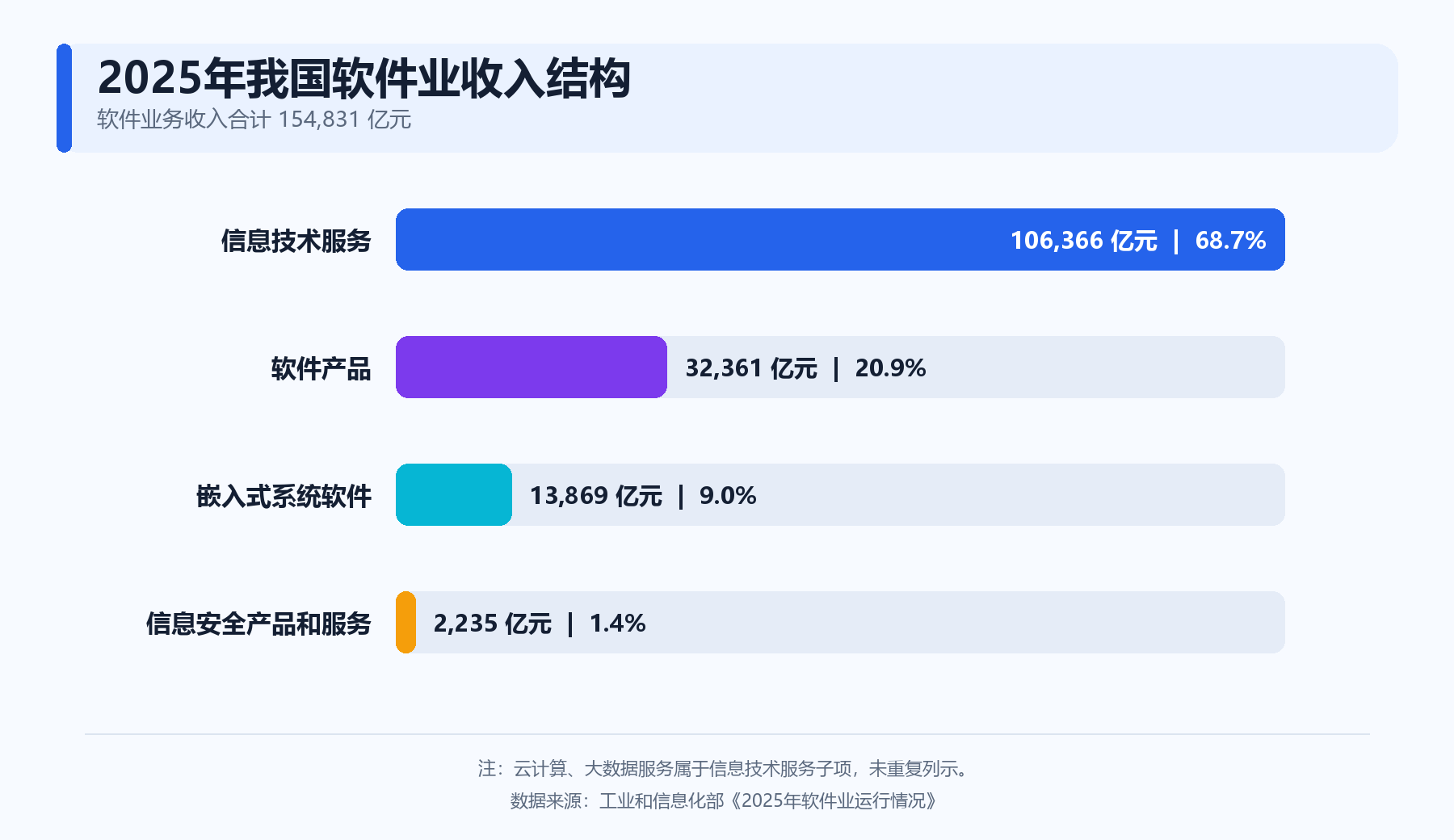
According to data from the Ministry of Industry and Information Technology, my country's software business revenue will reach 15,483.1 billion yuan in 2025, a year-on-year increase of 13.2%. Among them, information technology service revenue was 10,636.6 billion yuan, a year-on-year increase of 14.7%, accounting for 68.7% of the entire industry's revenue; cloud computing and big data service revenue was 1,623 billion yuan, a year-on-year increase of 13.6%.
Entering 2026, this structure continues to extend. In the first five months, national software business revenue was 6,245.1 billion yuan, a year-on-year increase of 10.3%; information technology service revenue was 4,276.1 billion yuan, a year-on-year increase of 11.3%, accounting for 68.5% of the entire industry's revenue; cloud computing and big data service revenue was 703.2 billion yuan, a year-on-year increase of 12.1%. During the same period, software product revenue increased by 6.9% year-on-year.
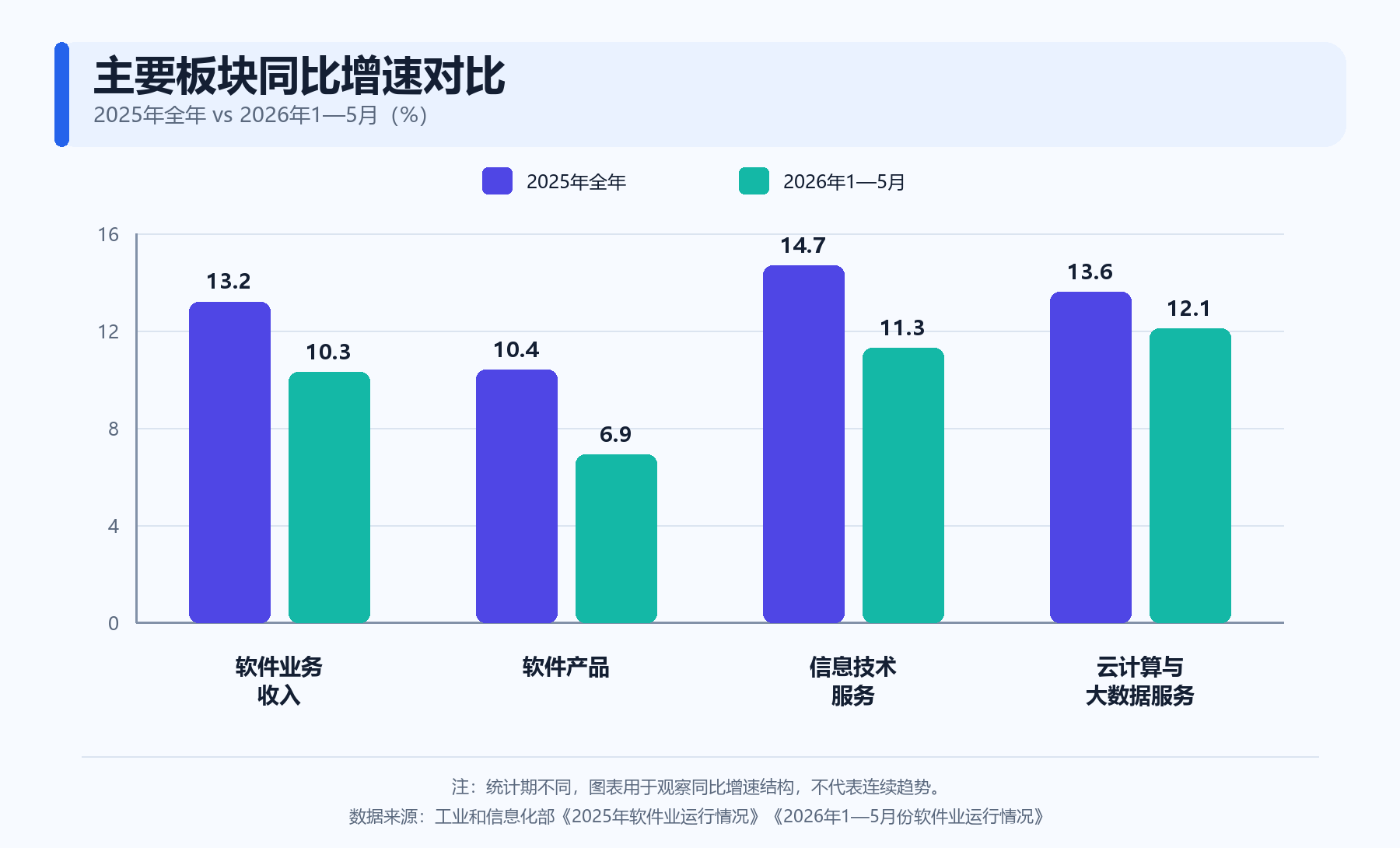
Revenue structure reflects industry changes better than total volume. Information technology services, cloud computing and big data services maintain faster growth, indicating that customers no longer need just a software product, but continuous data processing, platform operations, resource scheduling and technical service capabilities. The value of software is migrating from single point functions to system capabilities.
From model to system: The implementation of AI will test the "system power" of software
When models truly enter the industry, what comes with them is not demonstration effects, but engineering constraints. Industry data needs to be managed and continuously updated, heterogeneous computing power needs to be elastically scheduled, models need to be connected to existing business processes, calling behaviors need to be authorized, traced and audited, and running results need to be reviewed. If any link is missing, smart applications may remain in the pilot stage.
This round of industrial upgrading has also redefined the value of key national software companies. Global DigiTech Innovation Co., Ltd. was included in the list of "Key Software Enterprises Encouraged by the State" for the second time, and the selected field was "Emerging Technology Software". The list is jointly organized for application and review by five departments: the National Development and Reform Commission, the Ministry of Industry and Information Technology, the Ministry of Finance, the General Administration of Customs, and the State Administration of Taxation. It is a comprehensive affirmation of the enterprise's R&D investment, industrialization capabilities, business quality, and independent intellectual property rights at the national level.
The list shall be declared annually. Being selected again means that the company has once again passed the comprehensive inspection in its continuous innovation and business development, and it also opens up new space for the next stage of technological evolution and industrial practice.
Global DigiTech Innovation Co., Ltd.: Let software understand business, control execution, and verify value
Global DigiTech Innovation Co., Ltd. is advancing the software capabilities accumulated over the years into the vertical AI stage. AIOS unified management models, agents, tools, permissions, status, monitoring and auditing, allowing intelligent capabilities to work in a manageable operating order; Ontology precipitates industry objects, relationships, rules and result calibers, transforming industry knowledge into executable business rules; Agent completes observation, planning, calling, verification and writeback under constraints, forming a complete closed loop from task initiation to result delivery.
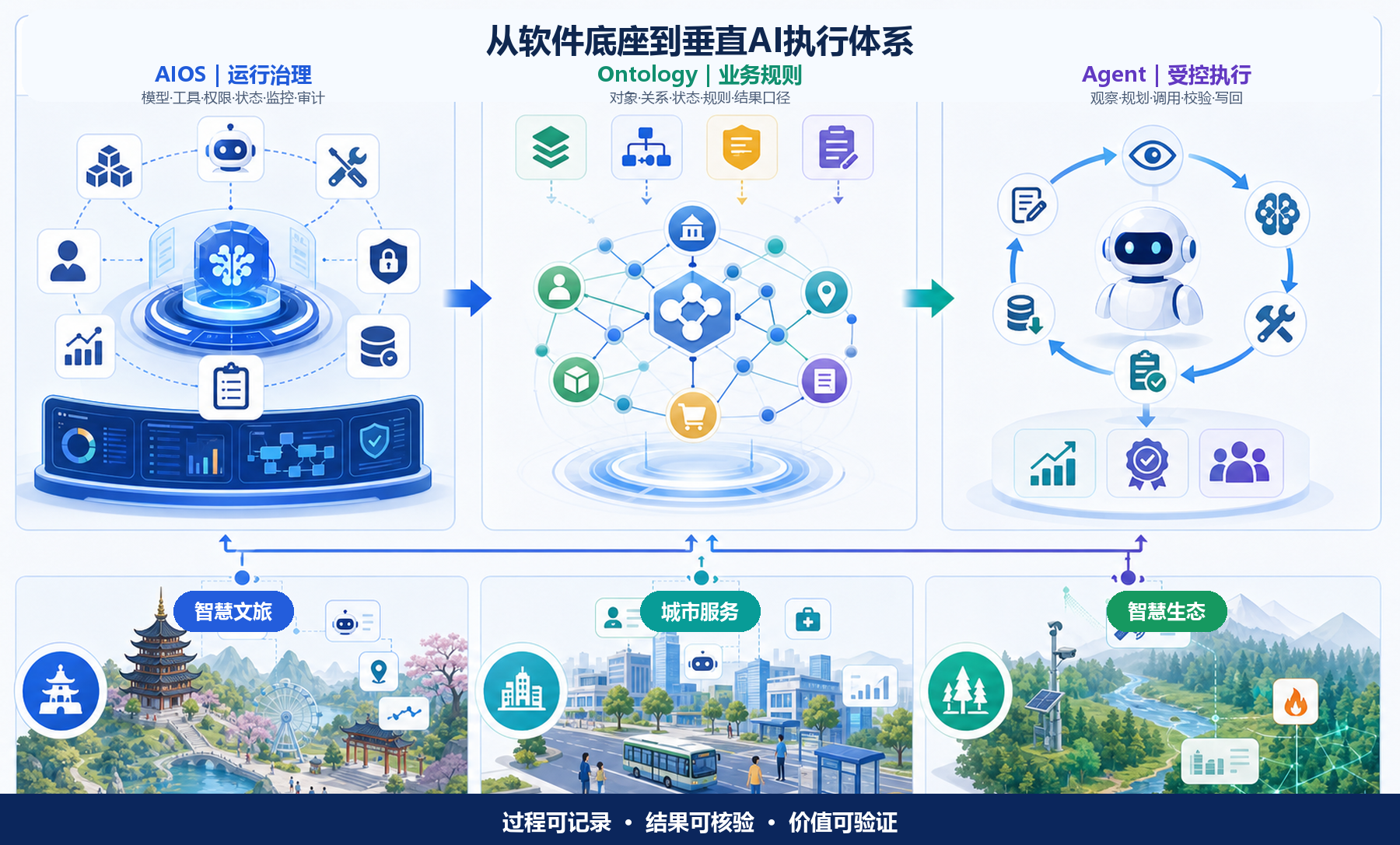
This system promotes software into a vertical AI system that can "understand business, controllable execution, and verifiable value." Process records allow each step of execution to be traced, and result evidence allows business value to be verified. Intelligent applications thus move from "giving answers" to "completing work."
Focusing on the three major tracks of smart cultural tourism, urban services, and smart ecology, Global DigiTech Innovation Co., Ltd. has formed three types of capabilities: industry AI base and native solutions, vertical AI and scene capability services, and smart terminals, IoT sensing, and integration services to connect models, data, business processes, and the real world.
As of June 2026, the company has formed an ABCDI patent matrix with 236 invention patents, and has participated in or led the construction of standards around intelligent agent interconnection and Internet of Things identification communication. These technological accumulations are being transformed into reusable and scalable industry engineering capabilities.
Looking to the future: Software becomes the organizational method for AI to enter the industry
Future software will be deeply integrated with data and AI: software is responsible for carrying and executing, data provides industry knowledge and real-time status, and AI is responsible for understanding, reasoning and decision-making. Only when the three work together in unified business rules, authority mechanisms and operational feedback can stable and sustainable industrial value be formed.
Competition among software companies will also shift from the number of functions to system capabilities. R&D methods have shifted from manual-led to human-machine collaboration, products have shifted from static tools to intelligent systems with continuous learning, and delivery has shifted from one-off projects to full life cycle operations. Growth is increasingly dependent on the reuse of industry knowledge, platform capabilities, and scenario assets.
AI will not end software, but will make software more proactive, deeper, and closer to business results.
Whoever can convert industry knowledge into business rules faster, intelligent decision-making into controlled execution, and technical investment into verifiable value will be more likely to take the initiative in the next round of industrial upgrading.